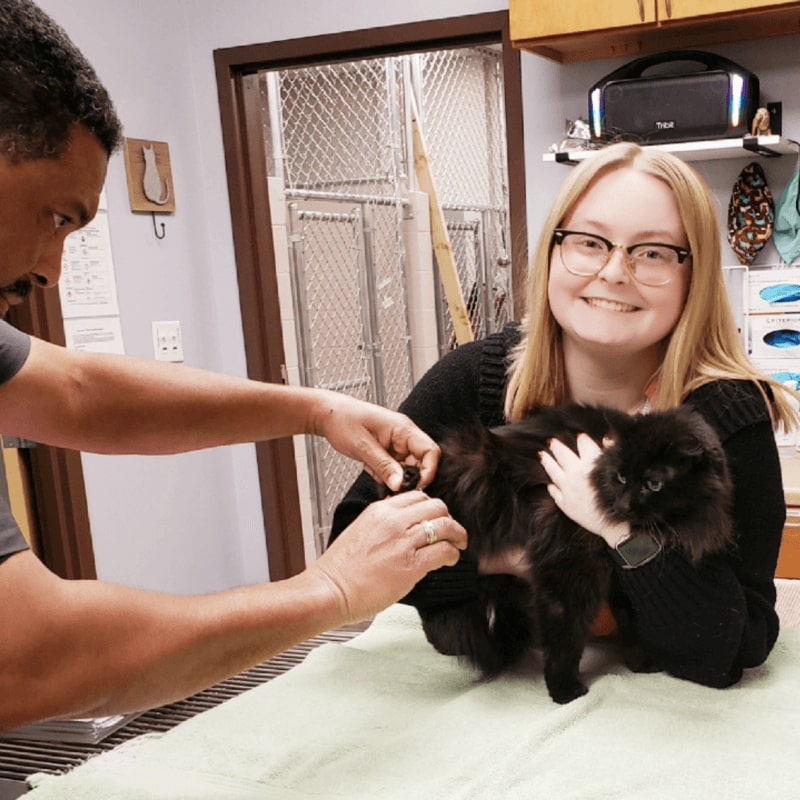

Believe it or not, one of the most difficult jobs vets in general practice face is convincing a pet owner that their pet is sick or in pain in the first place.
Vets in clincal practice are trained to hear, see and feel telltale signs than you might miss at home
Often, the message vets in the exam room receive from the patient during our physical exam is vastly different from how the owner has interpreted the message they’ve been receiving from that same pet at home. My exam room lighting is better than your living room lighting, my stethoscope hears better than your ears can… Sometimes, you just have to believe me when I tell you that a tumor is sore, or a fractured tooth is always painful, or that weight loss often equals chronic nausea and stomach discomfort, or that lameness always equals pain.
I encourage you to believe your veterinarian when he says your pet is ill or in pain. It’s our job to know these things.
So, without further ado, here are my Top 7 Misleading Phrases vets in general practice hear in the exam room that give us pause:
If you hear yourself saying any of these, please call our office at 317-721-7387 to discuss your options.
7. “My dog is visibly limping, but she isn’t crying out with every step, so I don’t think she’s in pain”
Vets in clinical practice know pets are masters of disguise. Dogs and especially cats are DESIGNED to hide their illness. In the wild, the weak are often attacked. When survival is the name of the game, walking around with a broken leg as though nothing is wrong, until it has time to heal, can mean the difference between life and death.
So for the most part, if you can SEE your pet limping, that means it hurts enough to override their instinct to hide pain, which is normally pretty powerful.
6. “My dog is scratching but I haven’t seen any fleas. Plus, he lives indoors. So there’s no way he has fleas.”
COMPLETELY indoors? Like, he never even goes out to pee?
Nine times out of ten, when I show a living, breathing, creeping, crawling flea to a pet owner, they’re floored. They had no idea their pet had bugs because they don’t have the same tools and lighting at home that vets in the exam room have. Fleas are really good at hiding deep within your pet’s hair coat.
5. “My cat is still eating, so she must not be in any pain, right?”
I hear this one a lot. A pet will be showing a dozen symptoms of illness, ranging from weight loss to rotten teeth, but people are so used to themselves not eating when they’re sick that they think pets do the same thing. In fact, because your pet has no idea it’s even POSSIBLE to treat their illness, they’ll often keep on pushing through the best they can and MAKE themselves eat.
Think about it: the only reason humans act so puny when we’re sick is to elicit sympathy from fellow humans. Since your pet doesn’t really understand that medicine exists, she’ll keep on trucking along the best she is able until she is physically INCAPABLE of taking in food. By then, whatever disease process she had is often beyond treatment.
4. “My cat has only lost a couple of pounds, I’m sure it’s just a hairball or something.”
Animals are designed to pack on pounds “just in case” there’s no food laying around. It’s an ancient natural-selection, survival-of-the-fittest instinct. Trust me, your cat has no desire to become a runway model. When your pet loses weight on their own without being on a restricted-calorie diet, visit the veterinarian and expect that I will want to run bloodwork.
Also keep in mind the proportion of your pet’s body weight that is lost. A ten pound cat who loses two pounds is equivalent to a 200 pound man who has lost 40 pounds. That’s a LOT!
3. “I know he can’t stand up, but my dog is still wagging his tail, so he must still be happy and want to live, right?”
Oh, this one brings most vets in practice to tears. I can’t tell you how heart wrenching it is to be called into a euthanasia, and find a geriatric Labrador Retriever laying down, unable to move, unable to stand, yet valiantly struggling to wag his big ol’ tail and appear happy. That’s a true testament to how much dogs want to please their humans, right there. Most of my Labrador Retrievers and Golden Retrievers, among others, wag their tails at me as I’m giving the euthanasia injection, and it nearly brings me to tears every time. Believe me when I tell you vets in general practice don’t take the responsibility for recommending euthanasia lightly.
2. “I know she sleeps most of the time, but every once in a while my cat gets up to play with a toy, so she must be OK, right?”
This is a tough one for vets in general practice to discuss with owners. Geriatric pets tend NOT to die suddenly in the middle of the night, but rather waste away slowly. So I urge you to think of it this way – when the question becomes “is she having more bad days than good days?” that’s when we start talking euthanasia.
1. “He’s old, he’s having trouble breathing, he’s lost control of his functions, he’s been losing weight for months, and now hasn’t eaten in 3-4 days… please make him better.”
Believe it or not, this is the hardest one of all for vets in clinical practice to answer. Most dogs and cats these days die of OLD AGE, not from being eaten by other creatures in the wild like in days gone by. Which means, an old dog or an old cat is old for a LONG time before we consider euthanasia. Joints start to ache, eyesight begins to dim… problems come on so slowly that it’s difficult for most people LIVING with these old pets to see slow changes come on. Rest assured that I am in the business of helping you decide when the time is right. Each case is different, of course, but we can certainly help you make the call.
Vets in general practice trust referral labs to help with difficult cases
I’m just going to throw this out there as a supplement to today’s list. While it is certainly exciting to try to GUESS what is wrong with your pet, for a couple hundred bucks, a complete blood and urine profile speaks volumes. Of course, since I don’t know which organ system is ill until AFTER I run the test, I usually run them all at once, in what we call a “comprehensive blood profile”.
When a patient can’t use words, we must search for answers in what they’re NOT able to say.
Vets in clinical practice know that sometimes, giving a pet owner concrete written evidence that their pet really is as sick as we already knew they are, is the first step to treatment.
Veterinarians are here to help
It’s not my job to make you feel guilty for not seeing some symptom in your pet that I see in the exam room. Much to the contrary, vets in general practice hear these misleading phrases all the time, and we’re specially trained to work through these issues with pet owners. If your pet is showing mysterious signs of potential illness, don’t wait, call the vets in Indianapolis or wherever you live so that we can help, and THANK YOU so much for reading!
If you have a comment, please leave it below! And if you enjoyed reading this story, please share it with your Facebook and Twitter friends.
Posted under vets in, vets in Indiana, vets in Carmel, vets in Indianapolis